Puzzle toys 8 min readBest Dog Puzzle Toys for Mental Stimulation
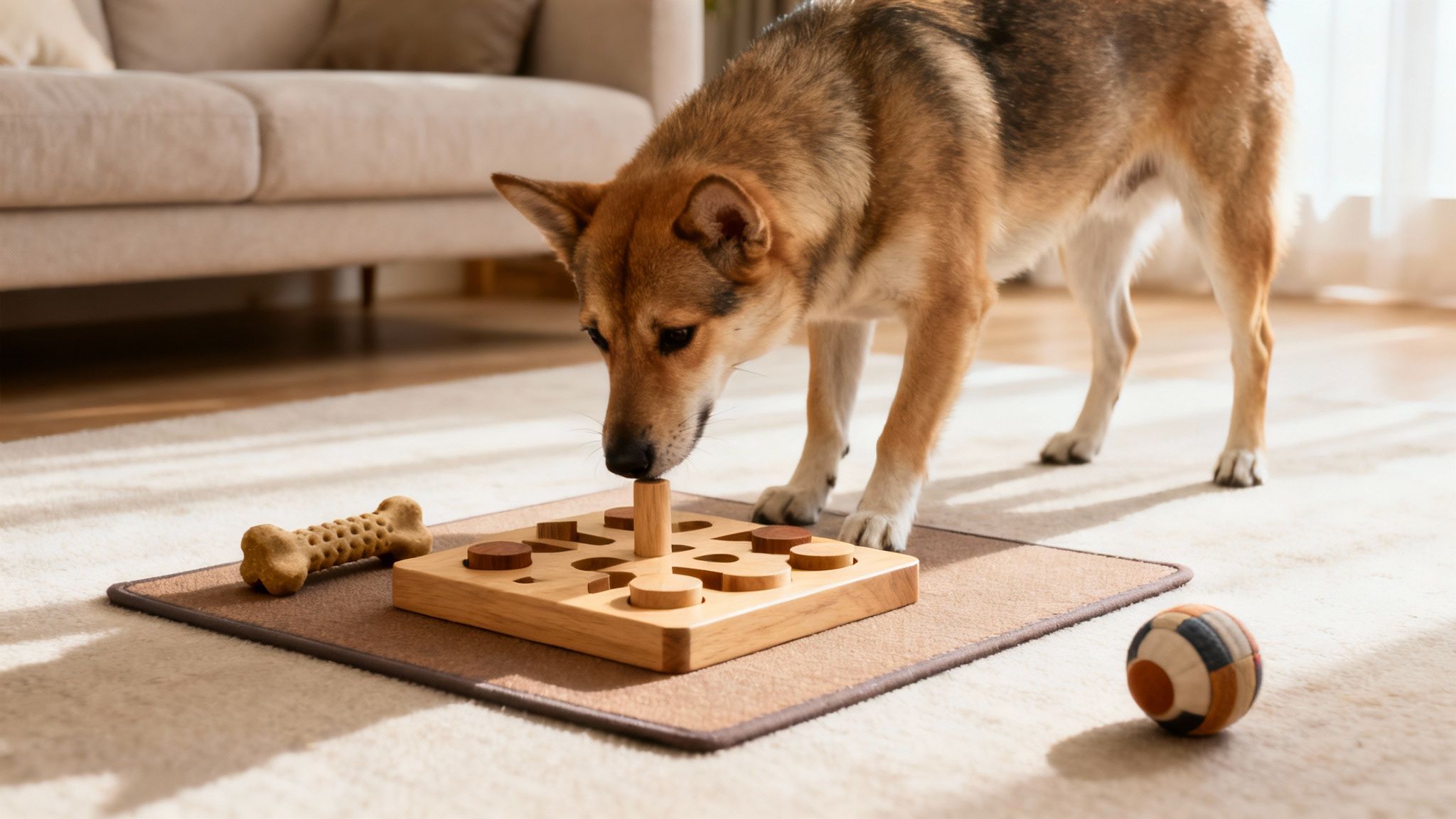
A puzzle toy makes your dog earn food by sliding, lifting, flipping, or rolling — and that problem-solving is what actually tires a smart dog out. This guide explains how to pick the right difficulty level, the three formats worth owning, and how to introduce a puzzle so your dog succeeds instead of giving up (or flipping it over).
Start one level easier than you think
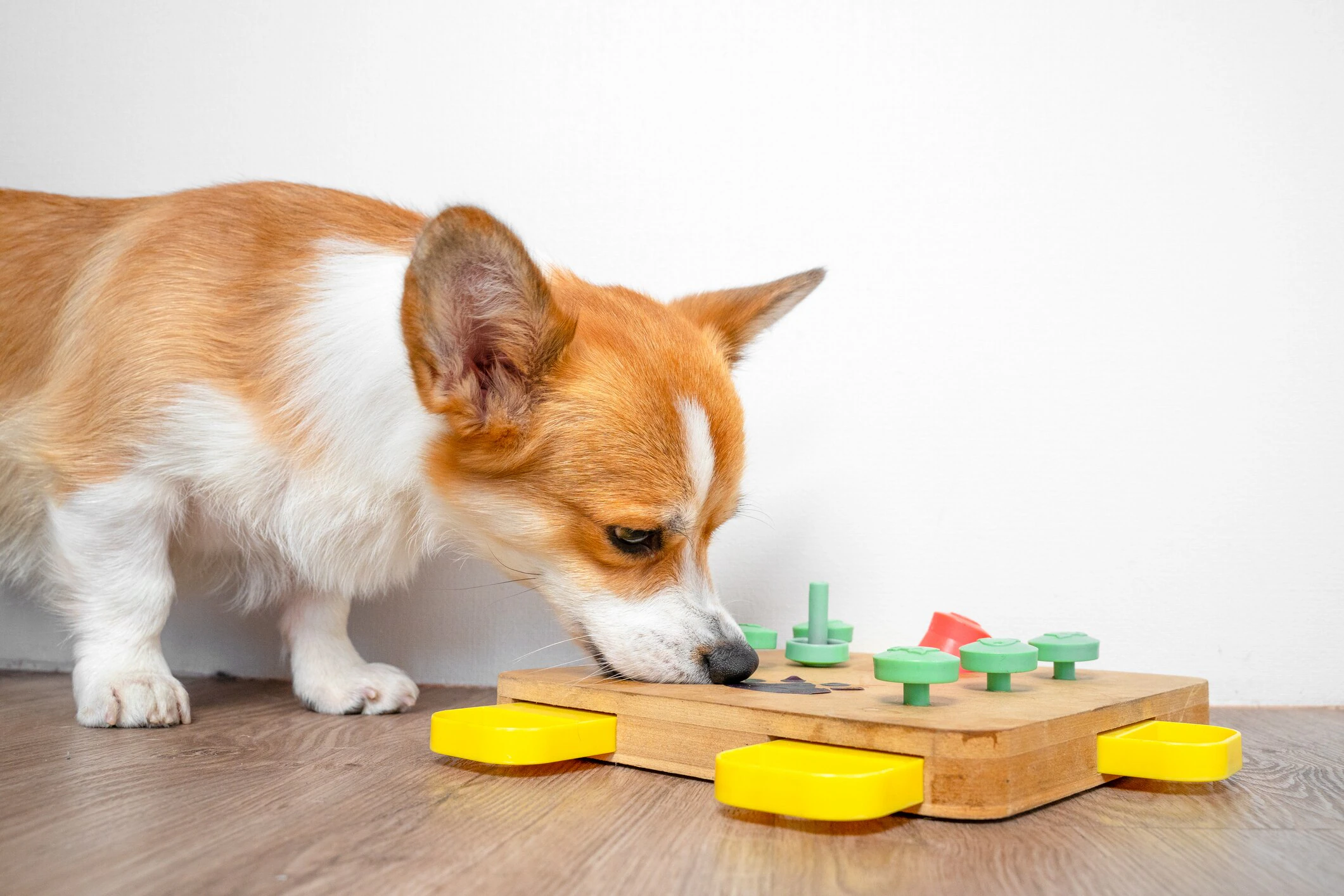
Most dogs quit puzzles that are too hard and chew puzzles that are too easy. Begin with a Level 1 format — big sliding covers or a treat ball — and let your dog win fast. Wins build the persistence that makes harder puzzles fun later. Move up only when your dog finishes the current puzzle calmly in under five minutes, twice in a row.
The three formats worth owning
Sliding/lift boards teach methodical nose-and-paw work. Treat-dispensing balls add movement for high-energy dogs. Freezable refill toys trade problem-solving for duration — one frozen fill can occupy a dog quietly for 20–40 minutes. Owning one of each covers bored, restless, and rainy-day situations better than three of the same kind.
Safety and supervision basics
- Always supervise puzzle play — pieces are not chew toys.
- Remove the puzzle when the food is gone so it doesn't become a chew target.
- Wash food-contact parts after every use; check for cracks weekly.
- Use part of your dog's regular meals as the reward to avoid extra calories.
Get the free 7-Day Dog Enrichment Plan
One simple brain game a day for a week — snuffle, lick, hunt, solve. Built from the same routines in our guides, in a printable one-pager.
Get the free plan
We'll only ever email enrichment tips and shop-launch news. No spam, unsubscribe anytime.